



Toytales Insights & Guides
Explore the latest trends, manufacturing guides, and plush toy industry insights.
2026 Top OEM Toy Manufacturers for Global Buyers
Table of Contents
- What OEM Toy Manufacturing Means for Global Buyers in 2026
- How to Evaluate the Best OEM Toy Manufacturers
- Key Production Capabilities and Customization Services
- Quality, Safety, Compliance, and Supply Chain Standards
- How to Select the Right OEM Toy Manufacturing Partner
- FAQS
- Conclusion
- Related Posts
Global toy sourcing is entering a more demanding phase. Buyers now expect creativity, traceability, safer materials, and predictable delivery. The 2026 market will reward manufacturers that combine flexible production with disciplined quality systems.
Circana reported that global toy sales declined by 7% in 2023 across its tracked markets. This result shows why product design alone is insufficient. An experienced OEM Toy Manufacturer must control sampling, tooling, testing, packaging, and shipment coordination. Grand View Research also identifies product innovation, licensed characters, and digital integration as important growth factors in the global toys market. These trends influence purchasing decisions, but they do not replace factory verification.
This guide introduces leading OEM toy manufacturers for global buyers. It considers production capacity, customization experience, quality management, export support, and communication reliability. It also highlights practical details, such as prototype accuracy, paint consistency, carton protection, and response times during revisions. Factories serving international markets should understand relevant requirements, including EN 71, ASTM F963, and ISO 8124, where applicable. Buyers must still confirm current regulations for each destination.
No ranking is perfect. Supplier performance can change with materials, staffing, seasonal demand, and order size. That limitation deserves attention. The strongest partner is not always the largest factory. A suitable manufacturer should match your product category, budget, testing needs, and launch schedule. The following overview offers a practical starting point for responsible sourcing in 2026.
What OEM Toy Manufacturing Means for Global Buyers in 2026
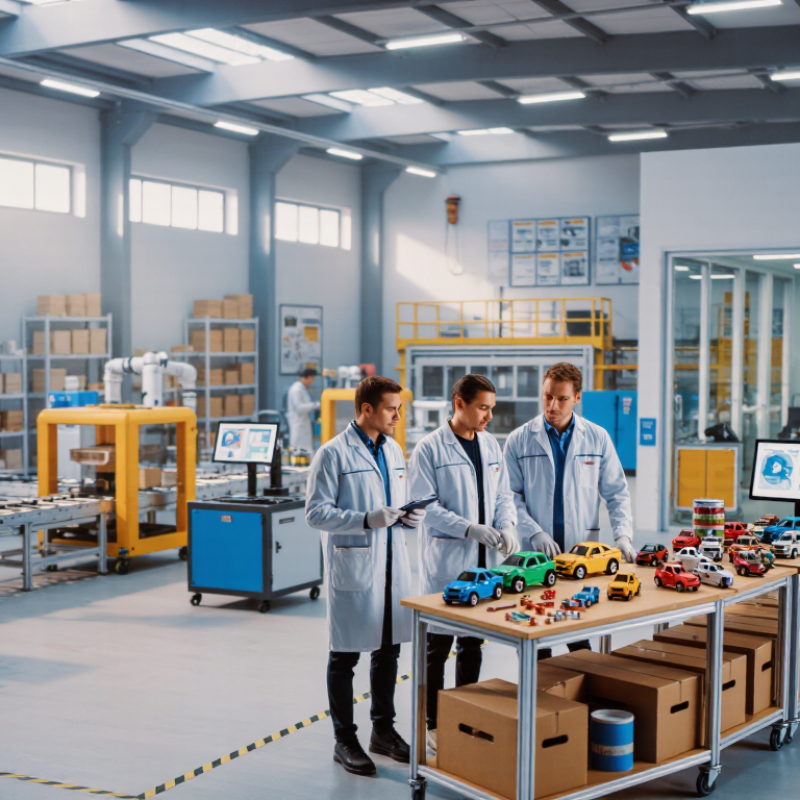
OEM toy manufacturing allows a buyer to develop products through an experienced factory. The buyer usually controls the concept, specifications, packaging, and target price. The manufacturer manages tooling, material sourcing, production, and quality checks. This structure matters as toy markets become more competitive. Grand View Research estimates the global toy market reached about USD 108.7 billion in 2024. Its report also forecasts continued growth through 2030, although regional demand remains uneven.
Demand is only one part of the decision. Circana reported that global toy sales across major markets fell 7% in 2023, showing how quickly consumer spending can change. Buyers should request verified test reports, traceability records, and production samples before approving a purchase order. Requirements may include EN 71, ASTM F963, or other applicable safety standards. Compliance is not a single document. It involves materials, paint, small parts, labeling, and age grading.
The factory visit still matters. A clean molding area, controlled storage room, and clear inspection records reveal more than a polished catalog. Cost forecasts should include tooling revisions, packaging changes, testing, and shipping delays. That is where many OEM plans become fragile. A lower unit price can hide higher rework costs. The model is efficient, but not frictionless. Buyers also need realistic forecasts, because sudden volume changes can disrupt labor planning and material purchasing. Some suppliers promise flexibility too easily. Careful buyers should test that promise with a small pilot order before scaling.
How to Evaluate the Best OEM Toy Manufacturers
Choosing among the 2026 top OEM toy manufacturers requires evidence, not attractive catalogs. Circana’s 2024 Global Toy Industry Performance Report recorded a 7% decline in global toy sales during 2023. That pressure makes accurate costing and flexible production especially important. Request three comparable quotations, including tooling, packaging, testing, and shipping assumptions.
Inspect production samples under real conditions. Check paint adhesion, seam strength, small-part security, sound levels, and packaging durability. Ask for recent laboratory reports against applicable standards, such as ASTM F963, EN 71, or ISO 8124. Reports should match the exact product, materials, and factory address. A generic certificate is weak evidence. Very weak.
Factory capability also matters. Review monthly capacity, molding equipment, assembly lines, and quality checkpoints. Ask how defects are recorded and corrected. An experienced supplier can explain its first-article process, batch inspections, and shipment-release criteria clearly. Grand View Research valued the global toys market at over USD 100 billion in 2023, with continued growth expected. This scale attracts capable manufacturers, but also inexperienced intermediaries.
Evaluate labor practices, material traceability, and business continuity records. Independent audits can reveal gaps that a video tour misses. I would still inspect the factory personally when order value is substantial. Remote verification saves time, yet it cannot fully show rework areas or warehouse conditions. Compare minimum order quantities with your forecast, because low pricing often hides excessive inventory risk. The best OEM partner is not always the cheapest. Reliability is proven through repeated, documented performance.
Key Production Capabilities and Customization Services
For global buyers, an OEM toy manufacturer should prove more than factory size. Production capability begins with material control, mold precision, and repeatable assembly. Experienced teams can develop plush, plastic, wooden, and electronic toys under one quality system. They should provide sample records, inspection points, and batch traceability. A reliable factory tests paint adhesion, small parts, seams, batteries, and package strength before shipment. Ask for measurable tolerances, not attractive promises. Good factories explain where production may slow. That honesty matters.
Customization works best when the brief becomes a controlled engineering process. Buyers may request a new character shape, soft-touch finish, sound module, gift box, or multilingual instructions. The supplier should provide 3D files, color references, prototypes, and a written approval sample. Tooling, minimum order quantities, lead times, and revision costs must be visible early. A first prototype is rarely perfect. Allowing one extra revision can prevent costly assumptions. Compliance support should cover age grading, chemical limits, labeling, and market-specific testing through qualified laboratories. A practical team also checks packaging drop resistance and carton loading, because damage often begins after production. Small details matter.
Quality, Safety, Compliance, and Supply Chain Standards
For global buyers, an OEM toy manufacturer must prove more than production capacity. Quality begins with controlled materials, stable tooling, and documented inspections. Every batch should have traceable records, from resin or fabric to packed cartons. Independent laboratory testing should cover mechanical hazards, flammability, heavy metals, and age grading. ASTM F963, EN 71, and applicable chemical rules provide practical benchmarks. The European Commission’s Safety Gate 2024 report identified toys as 15% of reported dangerous-product alerts. That figure deserves attention.
Supply-chain discipline matters just as much. A reliable factory maps critical suppliers, checks incoming materials, and separates approved lots from rejected stock. Buyers should review ISO 9001 procedures, corrective-action logs, calibration records, and worker training. Production samples must match the tested sample, including paint color, seam strength, sound level, and small-part security. The U.S. Consumer Product Safety Commission requires children’s products to rely on testing and certification records, not informal promises. A polished audit file is not enough. During factory visits, I would inspect storage conditions, label accuracy, and carton handling personally. Humidity damage often starts quietly. Some manufacturers still treat compliance as a final inspection, which is a serious weakness. A stronger OEM partner builds safety checks into design, sourcing, assembly, and shipment planning, while keeping realistic lead-time buffers for retesting or corrective work.
2026 Top OEM Toy Manufacturers for Global Buyers
Quality, Safety, Compliance, and Supply Chain Standards
This timeline highlights major international quality, toy-safety, chemical-compliance, and product-safety frameworks used by global OEM buyers. The years represent the first publication or adoption of each framework and are not manufacturer rankings or performance scores.
References: ISO 8124, ISO 9001, ASTM F963, REACH Regulation (EC) No 1907/2006, EN 71, and the U.S. Consumer Product Safety Improvement Act of 2008.
How to Select the Right OEM Toy Manufacturing Partner
Choosing the right OEM toy manufacturing partner requires more than comparing unit prices. Start with product experience, factory capability, and transparent communication. Ask whether the manufacturer has produced similar toys, managed complex assemblies, and supported international buyers. Request production samples, material specifications, inspection records, and clear explanations of tooling ownership. A reliable partner should answer directly.
Visit the facility when possible, or arrange an independent audit. Observe injection molding areas, painting rooms, assembly lines, and finished-goods storage. Check how workers identify defects and isolate rejected products. Ask about capacity during peak seasons, minimum order quantities, lead times, and backup plans. Small details matter. A missing batch record can create expensive confusion later.
Safety control must guide every decision. Confirm that the factory can provide traceable materials, age-appropriate designs, and testing documents for your target markets. Review packaging, labeling, and shipment procedures before approving mass production. Protect drawings and samples through written agreements, but do not assume paperwork replaces trust. Regular inspections still matter. No factory is perfect, and a rushed audit may miss weak points. I have found that early pilot runs reveal problems that polished presentations conceal. Leave room for corrective action, redesign, and honest feedback. A partner willing to discuss mistakes may be more dependable than one promising flawless production.
2026 Top OEM Toy Manufacturers for Global Buyers - How to Select the Right OEM Toy Manufacturing Partner
Practical comparison framework and indicative market benchmarks for evaluating OEM toy manufacturing partners
| Evaluation Dimension | Entry-Level OEM Partner | Established OEM Partner | Advanced OEM Partner | What Global Buyers Should Verify |
|---|---|---|---|---|
| Typical product focus | Simple plastic toys, basic plush items, promotional toys | Educational toys, role-play sets, construction toys, activity products | Electronic toys, connected products, complex multi-material systems | Previous production samples, engineering drawings, tooling records, and category experience |
| Indicative minimum order quantity | Approximately 500–2,000 units per design | Approximately 1,000–5,000 units per design | Approximately 2,000–10,000+ units per design | Whether MOQ applies per design, color, packaging format, or total purchase order |
| Prototype and sample timing | 7–15 business days for standard samples | 10–25 business days for customized samples | 15–35 business days for engineered or electronic prototypes | Sample approval process, revision limits, 3D prototyping capability, and sample ownership terms |
| Indicative mass-production lead time | 30–45 calendar days after approval | 45–75 calendar days after approval | 60–120 calendar days after approval | Tooling, component procurement, testing, packaging, and peak-season capacity assumptions |
| Common destination compliance | Basic documentation for the intended sales market | Documentation for major North American, European, and international markets | Multi-market compliance planning with product-specific technical files | Applicable requirements such as ASTM F963, CPSIA, EN 71, ISO 8124, REACH, and electrical safety rules where relevant |
| Quality management | Final inspection and basic production checklist | Incoming, in-process, and final quality inspections | Documented quality system, traceability, corrective-action process, and statistical controls | Inspection records, defect classification, sampling plan, audit reports, and corrective-action response time |
| Material and component control | Standard plastics, fabrics, coatings, and packaging materials | Broader material selection with supplier qualification procedures | Controlled bills of materials, approved-vendor lists, recycled-content options, and component traceability | Material declarations, restricted-substance controls, batch records, and change-notification procedures |
| Tooling and engineering support | Basic mold modification and production support | DFM review, mold-flow consultation, and packaging engineering | Full DFM, mechanical engineering, electronics integration, firmware coordination, and reliability testing | Tool ownership, mold maintenance, revision control, CAD confidentiality, and engineering change approval |
| Packaging and logistics | Standard cartons and buyer-supplied artwork | Custom retail packaging, carton optimization, and export documentation | Multi-language packaging, pallet engineering, compliance labeling, and coordinated international shipment planning | Packaging test results, carton dimensions, labeling requirements, Incoterms, and shipment responsibility |
| Best fit for buyer type | Small test orders, straightforward designs, and limited customization | Growing retailers, distributors, online sellers, and established product developers | Large-scale launches, technically complex products, and multi-market programs | Match supplier complexity with forecast volume, product risk, budget, and launch schedule |
Buyer Due-Diligence Checklist
Request current test reports for the exact product, production-site audit evidence, material declarations, inspection records, sample approval documents, tooling terms, capacity information, and a written process for handling design or material changes. Lead times, MOQs, and compliance requirements are indicative benchmarks and should be confirmed for each product and destination market.
FAQS
The buyer controls the concept, specifications, packaging, and target price. The factory manages tooling, materials, production, and quality checks. It is efficient, but not frictionless.
Request verified test reports, traceability records, and production samples. Check materials, paint, small parts, labeling, and age grading. One certificate is not enough.
A factory visit reveals daily controls behind the catalog. Inspect the molding area, storage room, and inspection records. Look for clean floors and labeled material racks. Photos can hide problems.
Ask for evidence of material control, mold precision, and repeatable assembly. The factory may handle plush, plastic, wooden, and electronic toys. Request sample records and batch traceability. Ask for measurable tolerances.
Turn the design brief into a controlled engineering process. Request 3D files, color references, prototypes, and approval samples. Possible features include sound modules, soft-touch finishes, and gift boxes. Small changes can create large costs.
Include tooling revisions, packaging changes, testing, and shipping delays. A low unit price may hide expensive rework. Packaging changes can affect cartons and loading space. Budgets often look too optimistic.
Use a small pilot order before increasing volume. Sudden changes can disrupt labor and material planning. Some suppliers promise flexibility too easily. Test the promise carefully.
Review chemical limits, paint adhesion, seams, batteries, and small parts. Check package strength and drop resistance before shipment. Carton loading also matters. Damage may begin after production.
Conclusion
In 2026, global buyers increasingly rely on OEM toy manufacturers to turn original concepts into safe, scalable, and market-ready products. An experienced OEM Toy Manufacturer can support the full process, from design development and prototyping to material selection, mold production, assembly, packaging, and delivery. Buyers should evaluate manufacturers based on production capacity, technical expertise, customization flexibility, communication efficiency, lead times, and ability to manage both small and large orders.
Quality and compliance are essential when selecting an OEM partner. Reliable manufacturers should follow recognized toy safety standards, maintain consistent quality-control procedures, use traceable materials, and provide appropriate testing and documentation for different markets. Strong supply chain management, transparent pricing, stable sourcing, and dependable logistics also help reduce delays and unexpected costs. By comparing capabilities, certifications, production systems, customization services, and long-term cooperation potential, buyers can choose an OEM Toy Manufacturer that supports product quality, regulatory confidence, and sustainable global growth.

Blog Tags:
Instant Query