



Toytales Insights & Guides
Explore the latest trends, manufacturing guides, and plush toy industry insights.
2026 Top Wholesale Plastic Toy Supplier Guide?
Table of Contents
- Define the 2026 Market: Global Toy Sales and a 4.5% CAGR Forecast
- Shortlist Suppliers by MOQ, Lead Time, Capacity, and Landed-Cost Data
- Verify ASTM F963-23, CPSIA, EN 71, and ISO 8124 Compliance
- Audit Factory Quality with AQL 1.5/2.5 Sampling and Test Reports
- Rank Suppliers by Certifications, Defect Rates, Pricing, and Export Data
- FAQS
- Conclusion
- Related Posts
The 2026 Top Wholesale Plastic Toy Supplier Guide begins with a changing market. Circana reported 7% global toy sales growth during the first half of 2024. Growth was measured in local currencies. That figure sounds encouraging, but it hides uneven regional demand and rising sourcing pressure.
A reliable Wholesale Plastic Toy Supplier must offer more than attractive catalog images. Buyers need consistent resin quality, clean molding, accurate colors, and dependable production schedules. Steve Pasierb, president and CEO of The Toy Association, describes toys as “the tools of childhood.” That perspective matters. A bright plastic building set still requires safe edges, secure parts, and age-appropriate design.
Material decisions now carry greater commercial weight. The OECD’s Global Plastics Outlook projects global plastic waste could nearly triple by 2060. This forecast should make buyers question disposable packaging and unnecessary material use. Recycled content may sound responsible, yet it can affect color stability, strength, and testing results. The answer is not always obvious.
This guide examines supplier experience, factory control, product development, testing documentation, and export reliability. It considers standards such as ASTM F963, EN 71, and ISO 8124. It also looks beyond the lowest quotation. A cheaper unit may create higher costs through defects, delays, or rejected shipments. That lesson is easy to write and harder to practice. Suppliers and buyers must still verify every claim, sample, certificate, and production batch before committing.
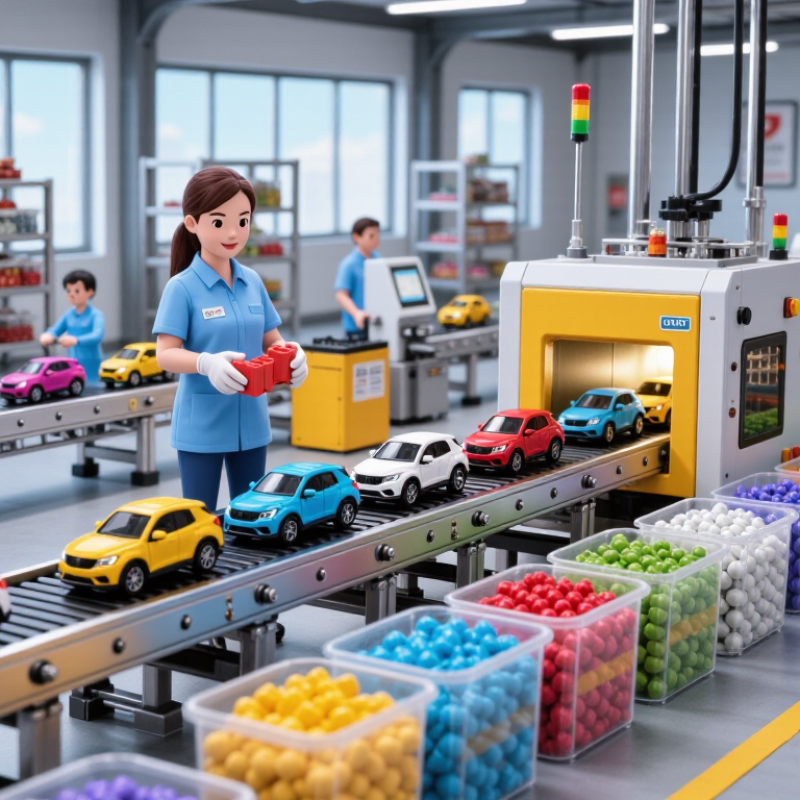
Define the 2026 Market: Global Toy Sales and a 4.5% CAGR Forecast
Global toy sales are entering 2026 with cautious momentum. Grand View Research estimates the global toys market at about USD 108.7 billion in 2023. Its forecast indicates approximately 4.5% compound annual growth through the decade. That pace suggests steady expansion, not a sudden boom. Wholesale plastic toy suppliers should plan for measured demand.
Regional buying patterns will shape this growth. Urban retailers often prefer compact toys with bright colors, smooth edges, and durable hinges. Online sellers need consistent photography, carton protection, and reliable size information. A practical supplier review should examine material declarations, factory quality records, production capacity, and shipment performance. Small details matter. A cracked wheel can create costly returns.
The International Trade Centre’s trade data also shows how strongly plastic toy supply chains depend on cross-border commerce. Suppliers should therefore offer clear documentation and stable packaging specifications. The 4.5% CAGR forecast is useful, but it is not destiny. Forecasts can miss inflation, weaker household spending, or changing safety requirements. That uncertainty deserves attention. In my view, the strongest 2026 supplier is not simply the cheapest producer. It is the one that combines repeatable quality, realistic lead times, responsive sampling, and transparent compliance evidence. Some purchasing teams still overlook defect rates because unit prices look attractive. That choice may need reconsideration.
Shortlist Suppliers by MOQ, Lead Time, Capacity, and Landed-Cost Data
2026 Top Wholesale Plastic Toy Supplier Guide
A reliable supplier shortlist starts with comparable data, not attractive product photos. Record each supplier’s minimum order quantity, unit price, tooling charge, and packaging requirement. A low MOQ may suit a test launch, but it can raise the unit cost sharply. Ask for a written MOQ by color, design, and shipment batch.
Lead time needs separate entries for sampling, tooling, production, inspection, and dispatch. A supplier promising 15 days may exclude mold preparation. Request a dated production schedule and compare it with recent delivery records. Capacity claims also require evidence. Review monthly output, available molding machines, shift patterns, and peak-season allocation. One factory visit or live video inspection can reveal crowded storage areas and limited equipment.
Landed cost is more useful than the quoted factory price. Include freight, insurance, duties, port fees, packaging changes, inspection, and possible rework. Use the same shipment volume when comparing suppliers. My first spreadsheet missed carton damage and inland transport, so its cheapest option was not actually cheapest. That mistake remains common. Request sample cartons, verify actual dimensions, and calculate cost per saleable unit. Keep supplier scores visible, but do not trust a perfect ranking without recent samples, production photos, and clear corrective-action records. Shortlists should change when evidence changes.
2026 Top Wholesale Plastic Toy Supplier Guide
Anonymous supplier archetypes compared by minimum order quantity, production lead time, estimated annual capacity, and landed cost.
The benchmark model shows the typical trade-off between order size, delivery speed, production capacity, and landed cost. Values are planning benchmarks for wholesale plastic toy sourcing rather than company quotations. Landed cost includes estimated manufacturing, standard packaging, ocean freight, insurance, and import handling per unit.
Verify ASTM F963-23, CPSIA, EN 71, and ISO 8124 Compliance
2026 Top Wholesale Plastic Toy Supplier Guide
A reliable plastic toy supplier must prove compliance before quoting volume prices. ASTM F963-23 is the current U.S. toy safety benchmark, while CPSIA requires applicable testing, tracking labels, and a Children’s Product Certificate. For European sales, request EN 71 testing, including mechanical hazards, flammability, and migration of certain elements. ISO 8124 can support international assessments, but it does not replace destination-market requirements.
That figure makes paperwork more than a purchasing formality. Ask for product-specific reports from an ISO/IEC 17025-accredited laboratory. Check the exact model, plastic resin, colorant, factory address, test date, and sample photographs. A recycled-plastic claim needs extra scrutiny, especially for heavy metals, phthalates, and restricted chemicals. One supplier’s old report may not cover a redesigned mold.
Tips: Keep a sealed production sample. Match it against the tested sample before shipment. Confirm small parts, sharp edges, loose wheels, and accessible magnets. Test every color when pigments differ. I would also audit batch records, although many buyers skip this practical step. Certificates can look convincing. They can still be incomplete. CPSC recalls and annual injury data should remain part of your supplier review, not an afterthought.
Audit Factory Quality with AQL 1.5/2.5 Sampling and Test Reports
A reliable wholesale plastic toy supplier should prove quality before shipment, not after customer complaints. Factory audits must verify resin traceability, mold condition, color consistency, and operator controls. Check one production batch from the actual order, not only a showroom sample. The European Commission’s Safety Gate 2023 report recorded 3,412 product alerts, with toys among the most frequently notified categories. Small defects can become costly recalls.
Use ISO 2859-1 sampling plans with AQL 1.5 for major defects and AQL 2.5 for minor defects. Inspectors should define the lot size, inspection level, sample quantity, and acceptance numbers before visiting the factory. AQL is not a promise that 1.5% of goods are always acceptable. It is a statistical decision rule. That difference matters. Critical safety defects should normally have zero acceptance.
Request current test reports for mechanical and physical safety, flammability, migration of restricted elements, and age grading. Match the report’s product code, material, factory, and test date to the purchase order. ISO/IEC 17025 accreditation strengthens laboratory credibility, but paperwork still needs review. I have seen reports covering an earlier mold while the factory used a revised one. That uncomfortable gap deserves attention. Re-test after material, pigment, mold, or packaging changes. A clear audit trail, sealed samples, and dated photographs make supplier decisions more defensible.
Rank Suppliers by Certifications, Defect Rates, Pricing, and Export Data
A strong 2026 wholesale plastic toy supplier should be ranked by evidence, not catalog size. Start with certifications: require current ISO 9001 records, ISO 8124 test reports, and destination-market compliance documents. EN 71 may apply to European sales, while ASTM F963 supports United States requirements. The OECD Due Diligence Guidance warns that certificates alone do not prove continuous factory control. Request the laboratory name, test date, sample code, and material description.
Defect rates deserve heavier weighting than impressive pricing. Ask for twelve months of first-pass yield, final inspection failures, rework percentages, and customer complaint records. A practical ranking can assign 35% to verified quality data, 25% to certifications, 20% to export performance, and 20% to total landed cost. QIMA’s 2024 Quality and Compliance Barometer shows why independent inspections remain useful: quality problems often appear before shipment, not after arrival. Still, supplier-reported figures can be selective. I would treat any unexplained “zero defects” claim as a warning.
Pricing should include mold charges, packaging, testing, freight, and replacement terms. Compare three equivalent samples, not three different products. Use UN Comtrade 2024 HS 9503 export data to check whether a supplier’s reported trade activity matches its shipment history; this code covers toys broadly, so it is not a perfect plastic-toy measure. Record minimum order quantity, lead time, port history, and seasonal capacity. The cheapest quote may hide thinner walls, loose joints, or unstable color batches. That mistake is easy to make.
FAQS
Record MOQ, unit price, tooling charges, and packaging requirements. Ask for MOQ by color, design, and shipment batch. A low MOQ can increase unit cost sharply. Photos are not enough.
Separate sampling, tooling, production, inspection, and dispatch dates. Request a dated schedule. Compare it with recent delivery records. A promised 15-day delivery may exclude mold preparation.
Request monthly output, machine numbers, shift patterns, and peak-season allocation. Review available equipment. A live video inspection can reveal crowded storage areas. Capacity claims need evidence.
Include freight, insurance, duties, port fees, packaging changes, inspection, and rework. Use identical shipment volumes for fair comparisons. Calculate cost per saleable unit. The cheapest quote may not be cheapest.
Request sample cartons before ordering. Verify carton dimensions and actual transport needs. Include inland delivery and possible carton damage. My first spreadsheet missed these costs.
Check material traceability, mold condition, color consistency, and operator controls. Inspect a batch from the actual order. Do not rely only on showroom samples. Small defects can become expensive complaints.
Define lot size, inspection level, sample quantity, and acceptance numbers beforehand. Use AQL 1.5 for major defects and AQL 2.5 for minor defects. AQL is a statistical decision rule. It is not a perfect quality guarantee.
Match the product code, material, factory, and test date with the purchase order. Review mechanical, physical, flammability, and restricted-element testing. Re-test after material, pigment, mold, or packaging changes. Paperwork can still contain gaps.
Update rankings after new samples, production photos, or corrective-action records. Keep supplier scores visible. Do not trust a perfect ranking. Evidence changes.
Conclusion
The 2026 wholesale plastic toy market is expected to expand steadily, supported by rising global demand and an estimated 4.5% CAGR. This guide explains how to identify a reliable Wholesale Plastic Toy Supplier by comparing minimum order quantities, production lead times, manufacturing capacity, shipping conditions, and total landed costs. Buyers can use these factors to build a practical supplier shortlist that matches their budget, schedule, and distribution goals.
Quality and compliance are equally important. Suppliers should provide current documentation supporting ASTM F963-23, CPSIA, EN 71, and ISO 8124 requirements, along with clear product test reports. Factory audits should review production controls, traceability, and AQL 1.5/2.5 inspection procedures. Finally, suppliers can be ranked objectively according to certification coverage, defect rates, pricing consistency, production performance, and verified export data. This structured approach helps buyers reduce risk, improve purchasing decisions, and establish dependable long-term supply relationships.

Blog Tags:
Instant Query