



18+ Years Experience Icon
18+ YearsIndustry Experience
Quality Standards Icon
Stringent QualityCE & Safety Certified
Customization Icon
Full CustomizationOEM & ODM Available
Flexible MOQ Icon
Flexible MOQWholesale & Bulk Orders
🧸 Industry Resources & Blog

Toytales Insights & Guides

Explore the latest trends, manufacturing guides, and plush toy industry insights.

0%

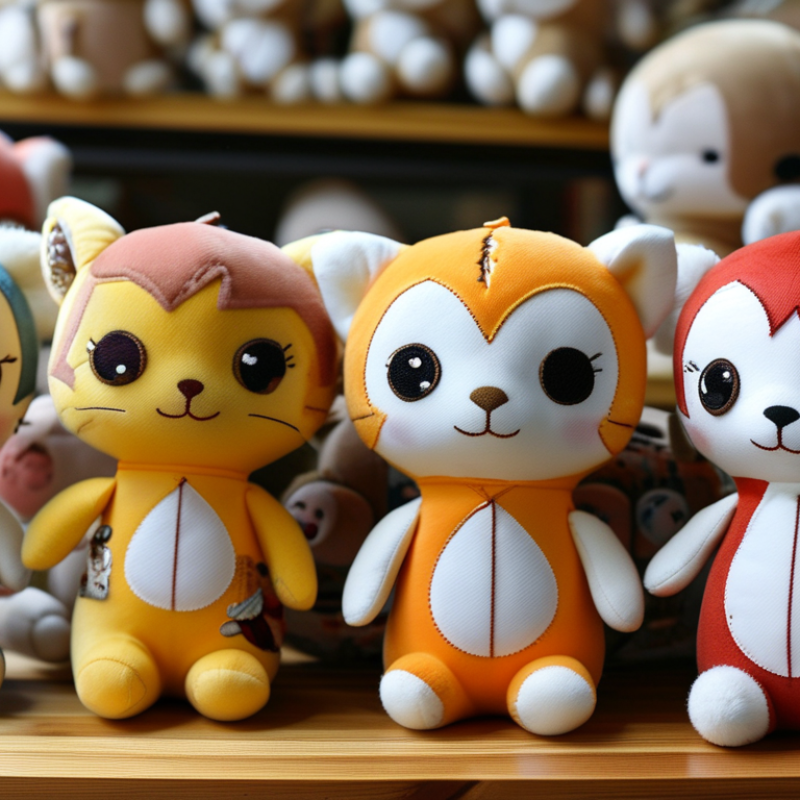
Finding a China Top Corporate Mascot Plush Toys Supplier requires more than comparing prices. A reliable partner should understand branding, product safety, factory communication, and long-term delivery needs. Corporate Mascot Plush Toys must represent a company clearly, even when displayed on a crowded trade-show table.

The strongest suppliers usually begin with practical questions. What is the mascot’s story? Who will hold it? Which size fits the budget? Designers may review sketches, colors, facial details, fabric choices, and embroidered logos before sampling. A soft prototype can reveal problems that digital artwork hides. Small eyes may look friendly on screen but appear uneven in production. Stitching can also weaken around narrow arms or oversized accessories.

Quality evidence matters. Buyers should request factory photographs, material information, sample records, and applicable safety testing documents. Clear communication about minimum order quantities, packaging, inspection points, and shipping schedules reduces unpleasant surprises. An experienced supplier should explain limitations instead of promising everything immediately.

No supplier is perfect. That matters.

A factory may offer excellent sewing but slower sampling. Another may provide fast production but limited character development. Buyers need to compare these trade-offs honestly. The right partner combines creative support, consistent workmanship, transparent pricing, and responsive service. This guide explores how to evaluate leading Chinese manufacturers and choose a supplier that protects both brand reputation and customer experience. Some details may still change during production, so written approvals remain essential.
China Top Corporate Mascot Plush Toys Supplier?

What Defines a Top Corporate Mascot Plush Toy Supplier in China

China Top Corporate Mascot Plush Toys Supplier?

What Defines a Top Corporate Mascot Plush Toy Supplier in China

A top supplier does more than sew a recognizable character. It turns a drawing into a safe, durable plush product through controlled steps. Experienced teams study proportions, fabric direction, embroidery density, and stuffing pressure before sampling. They also ask practical questions about use. Will children hold it daily? Will it sit on a trade-show counter? Does the mascot need to stand without leaning?

Material control shows professional knowledge. A reliable factory can provide fabric details, filling specifications, color references, and production records. It should explain applicable safety testing for the intended market, rather than making vague promises. Sample approval needs clear measurements, stitching checks, color comparison, and photographs from several angles. Small details matter. Loose threads and uneven eyes can weaken public trust.

Strong suppliers communicate early when a design is difficult. A tiny embroidered line may look clean on paper but disappear on soft fabric. A supplier that suggests a better stitch or revised shape demonstrates useful experience. Still, no prototype is perfect. We have seen attractive samples fail because the head became too heavy or the filling felt lumpy. Honest review prevents repeated mistakes. Production reliability also depends on inspection plans, packing protection, realistic lead times, and traceable corrections. These habits make a supplier more accountable, not merely cheaper.

Key Products and Customization Options for Corporate Mascot Plush Toys

Corporate mascot plush toys now serve as portable brand characters, not simple office decorations.

PPAI’s 2024 industry report placed U.S. promotional product sales at approximately $26.6 billion in 2023. That scale shows why buyers increasingly demand useful, memorable merchandise.

Key products include 15–30 cm desk plushies, backpack clip-ons, mascot keychains, and larger event display dolls. Each format supports different budgets and distribution plans.

Customization begins with the character’s silhouette. Suppliers can adjust ear angles, facial embroidery, fabric colors, clothing, accessories, and woven labels.

Soft minky fabric creates a richer touch, while short plush fabric gives sharper details.

Embroidered eyes often withstand handling better than printed details.

A reliable supplier should provide a digital drawing, material swatches, a 3D sample, and a pre-production approval. Independent testing against relevant toy-safety requirements, such as EN 71 or ASTM F963, also improves purchasing confidence.

Small details matter.

A 20 cm plush with a weighted bottom can sit neatly beside a monitor. A metal-free clip may reduce scratching on a backpack. Packaging can include recycled paper inserts and a short character story.

The Global Market Insights 2024 stuffed toy analysis identified personalization as a continuing market driver, although corporate mascot data remains less precise. That limitation deserves attention.

Buyers should not accept vague market claims. Request inspection records, sample photos, stitching details, and realistic production timelines. Slight imperfections may even make a mascot feel more human, but loose seams and uneven embroidery are not charming.

How Chinese Suppliers Manage Design, Sampling, and Production

China Top Corporate Mascot Plush Toys Supplier?

Chinese suppliers manage mascot plush production through a structured design, sampling, and manufacturing process. Grand View Research estimates that the global stuffed toys market reached about USD 11.7 billion in 2022, with steady growth expected through 2030. This demand raises quality expectations, not just order volumes.

The process usually begins with a technical pack, including character drawings, dimensions, fabric references, embroidery files, and Pantone colors. Designers may create a digital 3D mock-up before cutting fabric. A physical sample then checks facial balance, seam placement, stuffing density, and accessory safety. Small details matter. A two-millimeter eye shift can change the mascot’s expression.

The first sample is rarely perfect. This is normal. Suppliers commonly revise patterns, fabrics, or embroidery after review. Experienced teams record every change in a sample approval sheet. Before mass production, they prepare a pre-production sample and inspect materials against the approved version. Testing should follow applicable toy safety standards, such as ISO 8124 or EN 71, depending on the destination market. Intertek’s global testing guidance also emphasizes traceability, mechanical safety, and chemical controls.

Production planning usually includes incoming material checks, line inspections, stuffing control, and final carton audits. AQL-based inspections can reduce inconsistent stitching and uneven filling. However, inspection alone cannot fix weak design files. That remains an industry weakness. Clear communication, realistic sampling schedules, and documented approvals usually prevent more problems than rushed factory promises.

China Corporate Mascot Plush Toy Supplier Workflow

The chart shows typical lead-time ranges for key stages in custom corporate mascot plush toy production. Design development usually takes 3–7 days, sampling takes 7–14 days, bulk production takes 20–35 days, quality inspection takes 2–4 days, and standard international shipping takes 7–15 days. Actual timing depends on design complexity, order quantity, material availability, and approval speed.

Quality Standards, Safety Testing, and Manufacturing Capabilities

China Top Corporate Mascot Plush Toys Supplier?

Quality Standards, Safety Testing, and Manufacturing Capabilities

A capable corporate mascot plush toy supplier starts with controlled materials. Fabrics should have documented fiber content, colorfastness, and restricted-substance test results. Soft filling must remain clean, evenly distributed, and free from sharp contamination. These details affect both safety and product appearance.

Safety testing should match the destination market and product age range. Common checks include seam strength, small-part security, flammability, and chemical content. For example, inspectors may pull embroidered eyes, inspect stitching density, and measure loose fibers. A serious supplier keeps batch records and can provide laboratory reports from qualified testing facilities. Factory inspection also matters. Auditors should review needle control, worker training, storage conditions, and final packing procedures.

Manufacturing capability is visible in the sample room. Skilled pattern makers adjust head proportions, embroidery placement, and stuffing pressure before mass production. A reliable production line uses pre-production samples, in-line checks, and final random inspections. Traceable labels help identify materials and production dates when problems appear. No factory is perfect. I have found that honest suppliers discuss failed samples instead of hiding them. That openness supports corrective action, though it can slow delivery. Clear approval stages, realistic lead times, and documented quality limits reduce avoidable disputes. Small details matter. A mascot should feel soft, stable, and consistent from the first piece to the last.

China Top Corporate Mascot Plush Toys Supplier? - Quality Standards, Safety Testing, and Manufacturing Capabilities

Evaluation Dimension Typical Requirement or Capability Relevant Standard or Test Reference Practical Verification Point
Product Design and Sampling 2D artwork, 3D modeling, color matching, prototype development, and pre-production approval Customer-approved specification sheet and golden sample Check dimensions, proportions, embroidery placement, accessories, colors, and packaging before bulk production
Material Selection Polyester plush fabric, polyester or polypropylene filling, thread, trims, labels, and packaging materials selected for the intended market Applicable chemical and material safety requirements in the destination market Review material declarations, supplier documents, colorfastness results, and restricted-substance test reports
Seam and Stitching Quality Consistent seam allowance, secure thread locking, reinforced stress points, and no open seams or excessive loose threads Production inspection criteria and applicable toy durability requirements Inspect high-stress areas such as arms, legs, ears, tails, handles, and attachment points
Stuffing and Shape Retention Even filling distribution, stable shape, acceptable softness, and no hard foreign objects inside the product Customer-approved hand-feel and dimensional specification Compare filled weight, overall dimensions, firmness, and recovery after compression
Small Parts and Accessories Eyes, noses, buttons, ribbons, badges, plastic components, and other decorations must be securely attached or appropriately designed ASTM F963, EN 71, or other destination-market toy safety requirements, where applicable Confirm age grading, pull or torque testing needs, sharp-point evaluation, and choking-hazard assessment
Flammability Safety Fabric, filling, and finished plush construction evaluated according to the product’s target market and intended use Applicable sections of ASTM F963, EN 71-2, or other local regulations Use an accredited laboratory and test the final construction rather than relying only on raw-material certificates
Chemical Safety Control of restricted substances, heavy metals, phthalates, azo colorants, formaldehyde, and other substances where relevant REACH requirements, ASTM F963 chemical limits, EN 71-3, and applicable national regulations Match laboratory reports to the actual fabric, filling, prints, coatings, trims, and packaging used in production
Colorfastness and Surface Appearance Stable color, uniform pile direction, clean embroidery, smooth printing, and no visible stains or fabric defects Customer-approved color standard and relevant textile colorfastness methods Perform dry and wet rubbing checks, visual inspection under consistent lighting, and shade comparison against the approved sample
Manufacturing Process Pattern cutting, sewing, embroidery or printing, stuffing, shaping, finishing, inspection, and packing managed through documented procedures Documented quality-control plan and traceability records Confirm in-process inspection points, defect classification, rework controls, and batch identification
Quality Inspection Incoming-material inspection, first-piece approval, in-line checks, final random inspection, and shipment release AQL-based inspection plans may be used with mutually agreed sampling levels Define critical, major, and minor defects before production and record inspection results by lot
Packaging and Labeling Protective packaging, correct product information, care instructions, age grading, warnings, barcodes, and carton markings as required Destination-market labeling, packaging, and documentation rules Approve artwork and carton specifications before printing; verify carton quantity, dimensions, and shipping marks
Production Flexibility Custom shapes, multiple sizes, embroidered details, printed graphics, accessories, gift packaging, and promotional configurations Capability should be confirmed against the approved technical file Request samples demonstrating comparable construction, decoration methods, and packaging complexity
Compliance Documentation Technical files, material declarations, test reports, inspection records, corrective-action records, and shipment documentation maintained for each product Requirements vary by destination, product category, age grade, and sales channel Verify report validity, laboratory accreditation, sample description, test date, and consistency with the final product

Note: Testing requirements depend on the destination market, product design, materials, accessories, and intended age group. Final compliance should be confirmed with an accredited testing laboratory or qualified regulatory specialist.

How to Evaluate and Select the Right Chinese Supplier

China Top Corporate Mascot Plush Toys Supplier?

Corporate mascot plush toys require more than attractive sketches. Fortune Business Insights valued the global stuffed toy market at about USD 7.28 billion in 2023. It projects approximately USD 11.07 billion by 2030. This growth increases supplier choices, but also increases quality risks. A reliable Chinese supplier should show documented production experience, stable sampling procedures, and clear material records.

Request a factory audit before discussing large orders. Check cutting, sewing, stuffing, embroidery, and metal detection areas. Ask for production photographs, worker training records, and quality inspection reports. Confirm whether plush fabric, filling, thread, and accessories have traceable sources. Independent testing should cover applicable requirements, such as EN 71 or ASTM F963. Certificates alone are not enough. Inspect the actual sample.

Test the prototype by measuring seams, facial details, color consistency, and stuffing recovery. Pull the eyes, nose, and attachments firmly. Small defects become expensive during mass production. The supplier should explain sampling fees, minimum order quantities, tooling costs, lead times, and replacement policies in writing. ISO 9001 certification can support process confidence, but it does not guarantee every shipment.

One common mistake is choosing the lowest quotation too early. I have seen unclear artwork files create avoidable revisions. A better selection compares total cost, communication speed, defect handling, and inspection evidence. Leave room for correction. Supplier evaluation is never perfectly objective.

FAQS

What should a technical pack include for a mascot plush toy?

Include character drawings, measurements, fabric references, embroidery files, and exact color specifications. Missing details create avoidable revisions.

Why is a digital 3D mock-up useful?

It shows proportions before fabric cutting begins. A two-millimeter eye shift can change the mascot’s expression.

What does the physical sample need to prove?

It should show balanced facial features, clean seams, even stuffing, and secure accessories. The sample may still need changes.

Is the first sample usually final?

Rarely. Suppliers may revise patterns, fabrics, embroidery, or stuffing after review. That is normal, but it can slow delivery.

How should design changes be controlled?

Record every revision in a sample approval sheet. Confirm the approved version before mass production starts.

What safety checks are commonly required?

Testing may cover seam strength, small-part security, flammability, loose fibers, and chemical content. Requirements depend on the destination market and age range.

How can production quality stay consistent?

Use incoming material checks, line inspections, stuffing controls, and final random inspections. AQL-based checks can reduce uneven filling and stitching.

What records should a capable supplier provide?

Request material details, batch records, production dates, inspection results, and qualified laboratory reports. Traceability helps when problems appear.

What should buyers examine during a factory review?

Check the sample room, needle control, worker training, storage conditions, and packing procedures. A clean factory does not guarantee perfect production.

Can inspection fix a weak design file?

No. Inspection finds problems, but it cannot repair unclear drawings or missing measurements. Clear approvals prevent more trouble than rushed promises.

Conclusion

Choosing a top Corporate Mascot Plush Toys supplier in China requires more than comparing prices. A reliable supplier should offer strong design support, flexible customization, and the ability to turn sketches or concepts into accurate samples. Key options may include different sizes, fabrics, colors, facial details, accessories, packaging, and branding elements. Clear communication during artwork review, sampling, revisions, and mass production is essential for maintaining consistency and meeting delivery expectations.

Quality and safety should also be central to supplier evaluation. Professional manufacturers should have organized production processes, experienced workers, dependable material sourcing, and appropriate testing procedures for fabrics, fillings, dyes, stitching, and small components. Buyers should review factory capabilities, quality-control systems, sample accuracy, production capacity, lead times, packaging solutions, and after-sales communication. By assessing these factors carefully, companies can select a Chinese supplier capable of producing attractive, durable, safe, and consistently customized mascot plush toys.


Charlotte

Charlotte

Charlotte is a dedicated marketing professional with a strong understanding of the company’s products, services, and customer-focused solutions. Through her work, she combines market insight, clear communication, and practical product knowledge to help readers better understand how the company......
WhatsApp Chat with Toytales Instant Query