



Navigating CE Compliance, Procurement Trends, and Production Protocols in Commercial Toy Manufacturing
1. Executive Summary & Legal Framework of CE Certified Toy Manufacturing
In the contemporary global trade ecosystem, sourcing commercial toys demands more than evaluating aesthetic appeal and unit cost. Professional procurement teams, retail category managers, and amusement operators face stringent regulatory mandates enforced by international market surveillance authorities. The CE marking (Conformité Européenne) serves as a mandatory conformity stamp for commercial toys entering the European Economic Area (EEA), signifying compliance with the European Toy Safety Directive 2009/48/EC. However, true compliance extends far beyond affixing a badge; it requires rigorous factory-level process controls, full raw material traceability, and continuous batch testing protocols.
As a seasoned manufacturer operating over 18 years in the industrial hub of Delhi NCR (with primary production units in Tronica City, Ghaziabad), Toytales systematically bridges the gap between creative plush engineering and industrial safety standards. This document outlines the technical metrics, manufacturing methodologies, and procurement forecasting necessary for institutional buyers to mitigate supply chain risk, maximize ROI, and ensure zero-defect safety performance.
Core Procurement Insight: Non-compliant commercial plush imports risk customs seizures, heavy regulatory fines, and catastrophic brand recall damages. CE certification must be validated through accredited Third-Party Testing Reports (such as SGS, TÜV Rheinland, or Intertek) verifying EN 71 Parts 1, 2, and 3.
2. Technical Deep-Dive: Safety Regulations & Batch Traceability Protocols
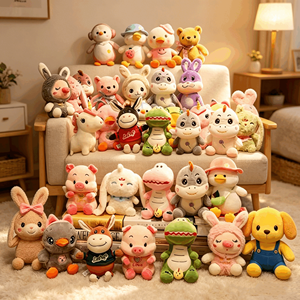
Commercial plush toys and stuffed animals intended for vending machines, retail shelves, or promotional giveaways must undergo rigorous analytical and mechanical evaluations before achieving export clearance. Key safety compliance frameworks include:
| Regulatory Standard | Geographic Jurisdiction | Test Criteria & Physical Thresholds | Manufacturing Prevention Protocol |
|---|---|---|---|
| EN 71-1 | European Union (EU) | Mechanical & Physical properties; Seam strength >70N tensile force; Small parts choke hazard tests. | High-density double-needle lockstitching; electronic pull-gauge seam inspection. |
| EN 71-2 | European Union (EU) | Flammability & rate of flame spread across surface fabrics and synthetic fur pile. | Application of flame-retardant treated polyester fibers and non-combustible fillers. |
| EN 71-3 | European Union (EU) | Migration of 19 heavy metal elements (Lead, Cadmium, Chromium, Organotin compounds). | OEKO-TEX Standard 100 certified non-toxic eco-dyes and virgin PP cotton. |
| ASTM F963 | United States (US) | Heavy elements analysis, sharp edge tests, stuffing cleanliness, magnet/battery safety. | Cleanliness testing of blown polyester; automated dual-head needle detection. |
| ISO 9001:2015 | Global Enterprise | Quality Management Systems (QMS) across pattern cutting, assembly, finishing, packaging. | Standardized SOPs, statistical process control, continuous audit readiness. |
Automated Ferrous & Non-Ferrous Needle Detection System
A non-negotiable step in commercial plush production is total metal decontamination. Broken needles during sewing pose severe injury risks to end-consumers. At Toytales, every single stuffed animal—ranging from standard 8-inch arcade crane plush to custom corporate mascots—passes through a dual-channel conveyorized needle detector calibrated to detect ferrous particles as small as 0.8mm. Batches failing this automated gate are immediately quarantined for destructive disassembly.
3. The Architecture of Custom Plush Engineering (OEM/ODM Workflow)
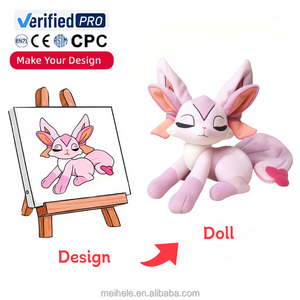
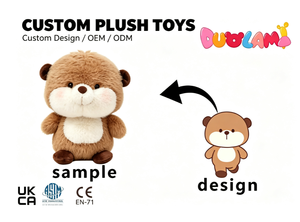
Transforming a 2D digital vector asset or brand character into a plush toy that maintains structural integrity, volumetric balance, and tactile softness requires advanced pattern digitizing. The commercial factory workflow at Toytales follows a structured 5-stage engineering lifecycle:
3D CAD Pattern Nesting
2D artwork is converted into geometric fabric panel layouts using CAD nesting software to minimize fabric yield waste.
Precision Laser Cutting
Automated CNC laser cutters achieve 0.1mm edge precision without fraying synthetic velour or boa fabrics.
Embroidery & Sublimation
High-speed Multi-head Tajima embroidery machines apply facial features, logos, and intricate branded motifs.
Automated Fiber Stuffing
Pneumatic blowing systems inject 1.5D to 7D conjugated siliconized PP cotton to ensure resilient bounce-back memory.
Metal Scan & Vacuum Pack
Passed units are scanned via metal detector and vacuum compressed into heavy-duty master cartons to optimize freight volume.
4. Future Procurement Trends in Commercial Toy Manufacturing (2025–2030)
As consumer expectations shift and global environmental regulations tighten, commercial buyers must align their procurement strategies with four key emerging industry trends:
Trend 1: Transition to GRS-Certified Recycled Fabrics (rPET)
The global retail market is aggressively phasing out virgin synthetic polymers. Global brands are demanding Global Recycled Standard (GRS) certified plush fabric derived from post-consumer recycled plastic bottles (rPET). Incorporating rPET fabrics and recycled polyester fill reduces carbon footprint by up to 40% while preserving the ultra-soft tactile feel of traditional plush.
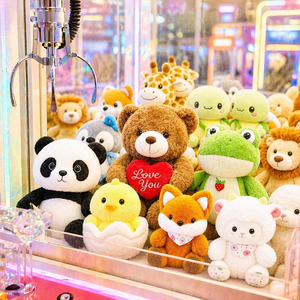
Trend 2: Optimized Engineering for Amusement & Claw Machine Vending
Amusement park chains, family entertainment centers (FECs), and claw crane machine operators require plush lines specifically engineered for claw grab mechanics. Key specifications include calculated center-of-gravity placement, high seam friction velours, and controlled weight-to-size ratios (e.g., 80g–120g for 8-inch crane mix). Commercial manufacturers must offer pre-assorted multi-character master boxes to reduce operator sorting labor.
Trend 3: Mood-Interactive & Sensory Tactile Toys
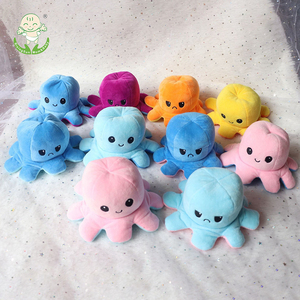
Driven by social media trends, products featuring reversible structures (e.g., mood flip octopuses), weighted plush bodies for anxiety relief, and multi-texture fabric combinations have experienced exponential demand spikes. Commercial factories must maintain flexible assembly lines capable of handling complex dual-sided stitching and internal weight bag insertions (filled with non-toxic, sealed glass microbeads).
Trend 4: Nearshoring and Supply Chain Diversification from India
To mitigate geopolitical risks and single-country supply dependencies, international buyers are establishing sourcing hubs in India. Facilities situated in Delhi NCR and Uttar Pradesh leverage skilled artisan craftsmanship, competitive labor economics, robust highway connectivity to major sea ports (Mundra, Nhava Sheva), and strong government support under manufacturing compliance incentives.
5. Enterprise Comparison: Factory Direct vs. Middleman Sourcing
Evaluating commercial manufacturing options requires examining total cost of ownership (TCO), quality risk, and turnaround efficiency:
| Evaluation Parameter | Direct CE Certified Factory (Toytales) | Trading Intermediaries / Brokers |
|---|---|---|
| Technical Prototyping | Direct collaboration with pattern master; 5-7 days turnaround. | Slower turnaround (15-30 days); communication misalignments. |
| Batch Compliance Risk | Direct liability; test reports matched to exact raw material lots. | Risk of recycled old certificates; unverified sub-factories. |
| Unit Cost Structure | Transparent factory pricing; optimized fabric utilization savings. | 15% to 35% agent markups with hidden commission fees. |
| Quality Assurance & Audits | Open door policy for factory audits (ISO, BSCI, SEDEX readiness). | Restricted facility access; third-party factory opacity. |