



Featured Wholesale & OEM Plush Doll Catalog
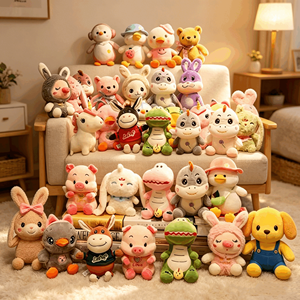
Explore our factory-direct cloth and plush doll models optimized for claw machine vending, retail distribution, corporate branding, and seasonal promotions.
Navigating China's Cloth Doll Manufacturing Ecosystem
An In-Depth Procurement Analysis for International Buyers, Brand Licensees, and Supply Chain Managers
The global plush and cloth doll market has undergone a structural transformation over the past decade. For B2B buyers—ranging from retail chain store buyers and novelty distributors to corporate IP brand holders—sourcing directly from specialized China cloth doll factories represents the most scalable strategy for achieving high gross margins without compromising safety compliance.
China remains the undisputed epicenter of plush textile manufacturing, producing over 70% of the world's soft toys. This dominance is sustained by highly integrated industrial clusters in provinces such as Jiangsu (Yangzhou), Zhejiang (Yiwu and Ningbo), and Guangdong (Dongguan and Chenghai). These regions house raw material mills, embroidery workshops, precision pattern-cutting plants, and accredited testing laboratories within tight geographic radiuses.
| Manufacturing Attribute | Direct China OEM/ODM Factory | Trading Intermediary | Domestic Regional Maker |
|---|---|---|---|
| Cost Optimization | Direct Factory Price (Base Margin +30-45%) | Marked up by 15% – 30% | High Overhead (2x to 3x Cost) |
| Customization Depth | Full OEM/ODM (3D Patterning & Prototyping) | Limited to Catalog Catalogues | Moderate Craftsmanship Scale |
| Safety Compliance | Direct EN71, ASTM F963, CPSIA, ISO9001 | Third-Party Dependent | Regional Standards Only |
| Scalability & MOQ | 500 to 100,000+ Units / Month Capacity | Variable Sub-contracted Lines | Low Capacity Constraints |
E-E-A-T Sourcing Principle: Evaluating Factory Verification Criteria
When conducting supplier audits for cloth doll and plush toy manufacturing, qualified B2B buyers must look beyond basic price quotes. The following operational criteria form the core of institutional supplier evaluation:
- Textile & Stuffing Integrity: Verification of virgin Grade-A 3D/7D hollow conjugated polyester staple fiber (PP cotton) versus recycled industrial waste filler. High-tier factories utilize non-allergenic, odorless filling that maintains structural resilience following vacuum compression.
- Seam Pull-Strength Engineering: Sewing execution utilizing 100% spun polyester thread with minimum tensile thresholds exceeding 90 Newtons (9.18 kgf) under ASTM F963 seam tension testing. This prevents seam ruptures that present choking hazards.
- Needle Detection Protocol: Automated double-pass metal detection (sensitivity set to 0.8mm-1.0mm ferrous sphere equivalent) across 100% of finished goods prior to carton sealing.
Future Product & Material Development Trends (2025–2030)
Key Technological, Material, and Environmental Innovations Reshaping Global Cloth Doll Production
Eco-Friendly & Sustainable Textiles
Increasing global regulatory pressure (such as the EU Corporate Sustainability Due Diligence Directive) is driving demand for GOTS-certified organic cotton, bamboo rayon, and 100% post-consumer recycled polyester fabrics (rPET derived from recycled ocean plastics). Modern China factories are integrating OEKO-TEX Standard 100 Class I certified fabrics suitable for infant skin contact.
Automated Pattern Cutting & Precision Embroidery
The transition from manual dye-cutting to multi-head CO2 laser cutting systems has reduced pattern margin error to under 0.2mm. High-speed multi-needle computerized embroidery machines now execute intricate facial expressions, gradient shading, and fine tactile logos directly onto plush fabric panels, replacing hazardous glued-on plastic components.
Sensory & Interactive Hybrid Plush
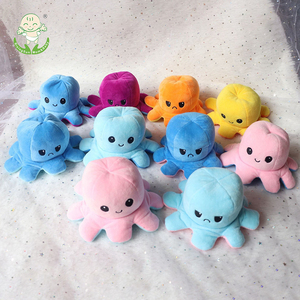
Next-generation cloth dolls are blending traditional plush craftsmanship with tactile and interactive elements. Smart voice IC chips, washable squeakers, weighted glass-microbead filling for anxiety relief, and reversible dual-expression textiles represent the fastest-growing categories in retail soft goods.
B2B Procurement Trends: Operational Sourcing Strategies
How Global Brands, Arcade Operators, and Distributors Optimize Lead Times, MOQs, and Logistics
1. Modular Prototyping & Rapid OEM Turnaround
Traditional toy development cycles previously required 45-60 days just for physical sample iterations. Leading China OEM suppliers now leverage digital 3D CAD modeling software (such as CLO 3D or Blender) to translate 2D character artwork into flat sewing patterns in under 48 hours.
This rapid prototyping capability reduces sample approval cycles to 7–10 days, allowing brand owners to capitalize on viral internet trends and seasonal retail windows without over-committing capital.
2. Claw Crane Vending & Arcade Standardization
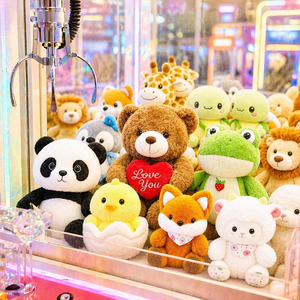
The global expansion of amusement centers, family entertainment centers (FECs), and claw machine arcades has created massive demand for standardized 8-inch and 12-inch plush toy mixes. Procurement teams require strict dimensional uniformity and weight calibration (typically 120g - 150g per unit) to ensure seamless performance with mechanical claw tension settings.
Direct factory bulk purchasing ensures consistency across multi-thousand unit shipments, preventing operational jamming in vending hardware.
3. Vacuum Compression & Freight Cost Reduction
Sea freight rates fluctuate significantly; soft stuffed toys inherently occupy high CBM (Cubic Meter) volume relative to weight. Advanced China factories utilize high-density hydraulic vacuum packing units to compress plush inventory by up to 75% in volume.
This space reduction allows twice as many units to fit into standard 40ft High Cube (40HC) containers, cutting per-unit international shipping costs dramatically.
4. Intellectual Property (IP) Protection & NDAs
For custom mascot manufacturing and licensed merchandise, IP integrity is paramount. Professional B2B suppliers establish strict non-disclosure agreements (NNN Agreements under Chinese Jurisdiction), segregated sample development rooms, and secure mold/pattern disposal protocols to ensure client designs never breach exclusivity boundaries.
Our Factory Strengths & Manufacturing Quality Framework
Combining 18+ Years of Craftsmanship with International Safety Standards and Flexible B2B Terms
18+ Years Manufacturing Heritage
With nearly two decades of continuous operation, our facility operates modern production lines equipped with automated fabric spreaders, ultrasonic cutting machinery, high-precision embroidery systems, and stuffed-animal filling stations capable of producing up to 500,000 units monthly.
Comprehensive Quality Assurance
Every batch undergoes incoming raw material testing (colorfastness, formaldehyde, heavy metals), in-line seam inspection, 100% metal detection, and final AQL 2.5/4.0 random sampling inspections prior to export dispatch.
End-to-End OEM & ODM Services
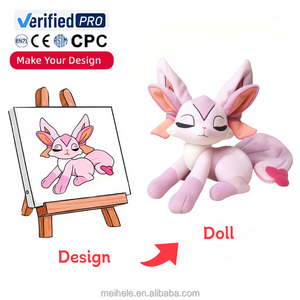
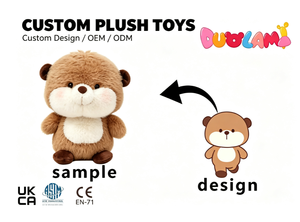
Whether you provide a rough hand sketch, a 2D vector file, or an existing reference sample, our in-house master sculptors and pattern designers transform your concept into production-ready physical prototypes complete with custom hangtags, woven labels, and retail packaging.
Ready to Develop Your Custom Cloth Doll Line?
Contact our engineering and sales team for rapid sample prototyping, custom factory price breakdowns, and full compliance documentation.
Frequently Asked Questions (FAQ) for B2B Plush Doll Procurement
Answers to Essential Questions Regarding MOQs, Safety Standards, Customization, and Freight Logistics
- Europe: EN71 Parts 1, 2, & 3, CE Mark, REACH chemical standards.
- North America: ASTM F963, CPSIA (Lead and Phthalate testing).
- International Factory Audits: ISO9001 quality management, BSCI social compliance, and Disney FAMA audit capability.
Partner with China's Premier Cloth Doll Manufacturing Operations
Gain a direct competitive edge through optimized manufacturing costs, zero-defect quality control, and rapid prototyping capabilities tailored to your market goals.