



Featured Wholesale & Custom Plush Product Lines
Explore our precision-engineered soft toy series, manufactured under ISO9001 quality frameworks with 100% compliance with international safety mandates (EN71, ASTM F963, CPSIA).
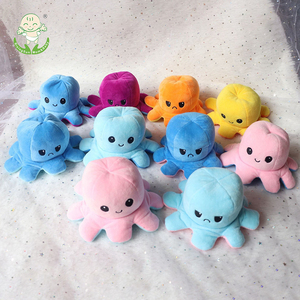
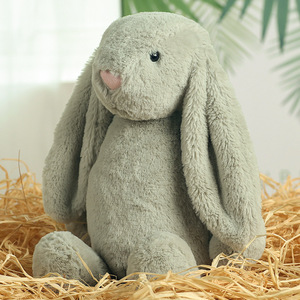
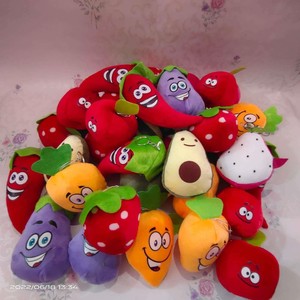
Wholesale Low Price Sales Animal PP Cotton Keychain Doll Grabbing Machine Plush Toy Pendant
Get a Quote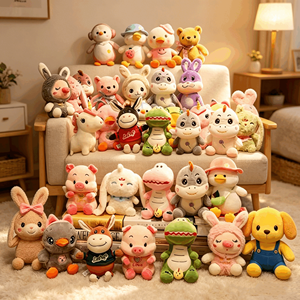
Navigating the Global Custom Plush Supply Chain in 2025 and Beyond
The global plush toy market has undergone a paradigm shift, transitioning from conventional, low-cost commodity manufacturing toward high-precision, safety-critical, and ecologically sustainable production. As global brand owners, theme park operators, arcade distributors, and corporate gift procurers scale their supply chains, identifying a top China custom plush supplier and exporter requires an in-depth evaluation of manufacturing engineering, compliance integrity, material science, and rapid-prototyping responsiveness.
Key Trends Reshaping Custom Plush Toy Production
Modern procurement directors must realign their sourcing specifications to match shifting consumer expectations and regulatory mandates across North America, Europe, and Asia-Pacific.
Eco-Friendly & Sustainable Textiles
Environmental compliance is no longer optional. Leading exporters utilize GRS (Global Recycled Standard) certified rPET plush fabrics made from recycled post-consumer plastic bottles, paired with 100% biodegradable organic cotton fibers and OEKO-TEX Standard 100 approved dyes.
Smart & Interactive Feature Integration
The integration of embedded electronics—such as voice-recording IC chips, micro-actuators for movement, LED illumination arrays, and haptic modules—demands specialized manufacturing facilities capable of housing clean-room electronics assembly and ultrasonic fabric welding.
Ultra-Strict Chemical Safety Mandates
Custom plush toys must adhere to zero-tolerance policies regarding phthalates, heavy metals, total lead content, and volatile organic compounds (VOCs). Exporting to Tier-1 markets requires rigorous testing under EN71 Part 3, ASTM F963-17, and REACH legislation.
Custom Plush Material Specification & Testing Matrix
Understanding the material parameters and physical testing requirements is essential for specifying high-grade OEM plush items.
| Parameter Category | Technical Specification / Standard | B2B Quality Benchmark | Primary Testing Protocol |
|---|---|---|---|
| Outer Shell Fabric | Crystal Super-Soft Velboa / Coral Fleece / Long Pile Plush (1.5mm - 45mm) | Grammage: 220 GSM - 450 GSM; High Fiber Density | ISO 12945 (Pilling Resistance), Colorfastness to Rubbing |
| Internal Fiber Fill | 100% Virgin 3D/7D Hollow Conjugated Siliconized PP Cotton / rPET Fill | High Resiliency, Non-Allergenic, Odorless | GB/T 14344, Flammability Test (EN71-2 / ASTM F963) |
| Seam Strength & Tensile | Double-Lock Stitching / Reinforcement Backing Tape on Stress Points | Seam Tensile Force > 90N (Tension Pull Test) | ISO 13935-2, 15-Pound Pull Test (ASTM F963 Section 8.9) |
| Eyes & Attachments | Safety Washer Plastic Eyes / Computerized Precision Embroidery | Withstands > 21 Lbf (90 N) Direct Pull Force | Small Parts Hazard Test (16 CFR 1501 / EN71-1) |
| Contamination Prevention | Dual-Channel Automated Conveyor Metal Detection System | Ferrous Metal Sensitivity < 0.8mm; Non-Ferrous < 1.0mm | 100% Inspection Prior to Vacuum Compression Packing |
The Engineering Blueprint: From Concept Artwork to Finished Export
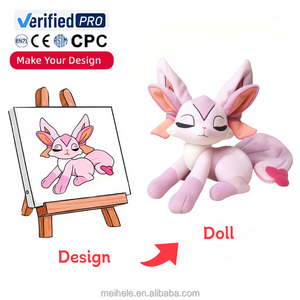
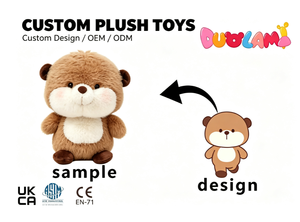
Our systematic manufacturing workflow guarantees seamless translation of 2D character sketches into compliant 3D plush physical products.
2D Design to 3D Pattern Drafting
Master pattern engineers review client vector artwork or character sheets. Utilizing specializedCAD pattern software, flat fabric paper patterns are sculpted to dictate exact seam contours, dimensional proportions, and fabric grain alignment.
Rapid Prototyping & Sample Engineering
Within 3 to 7 working days, a physical sample is hand-crafted. Laser cutting ensures millimeter-accurate fabric panels, followed by initial stuffing balancing. Physical samples are sent to global clients for structural review and material sign-off.
Automated Precision Cutting & Decoration
Upon sample approval, high-speed multi-head laser cutters and automatic die-cutting presses execute bulk fabric sectioning. High-density Japanese Tajima embroidery machinery or digital dye-sublimation printers execute intricate facial details and branding logos.
Assembly, Lock-Stitching & Stuffing
Skilled sewing technicians utilize heavy-duty double-needle lockstitch machines. Key stress zones are reinforced with non-woven backing. Pneumatic cotton stuffing injectors distribute PP fiber evenly to achieve precise firmness and weight distribution.
100% Metal Detection & Quality Assurance
Every plush unit passes through a dual-probe electromagnetic needle detector system to verify the complete absence of broken sewing needles or metallic shrapnel. In-house QCs perform pull-tests, stitch-density audits, and aesthetic evaluations.
Compression Packaging & Global Logistics
Units are polybagged, vacuum-compressed to minimize freight volume by up to 60%, and packed into heavy-duty 5-ply corrugated export master cartons. Logistics handlers orchestrate ocean container load (FCL/LCL), air freight, or DDP delivery to global ports.
Why Top Global Brands Partner With Us
Combining 18+ years of deep OEM heritage, state-of-the-art infrastructure, and dedicated international account managers to ensure flawless execution.
Flexible Low MOQ Solutions
We accommodate both fast-growing boutique brands and global retail conglomerates by offering modular minimum order quantities starting from as low as 500 pcs per custom design.
Comprehensive Quality Records
Operating under strict ISO9001 and BSCI social compliance guidelines. Every production batch is backed by full traceabilty documents, batch testing logs, and pre-shipment inspection (PSI) reports.
Turnkey OEM/ODM Development
From initial sketch concept to custom branded hangtags, sewn-in woven labels, barcode packaging, and POP display box design, we deliver complete turnkey merchandising solutions.
Global Trade & Tariff Efficiency
Experienced in handling global trade documentation, Form A / Certificate of Origin issuance, custom duties mitigation, and reliable door-to-door (DDP) multimodal transport options.
Custom Plush Sourcing & Manufacturing FAQ
Detailed answers to critical technical, compliance, financial, and logistical questions asked by global B2B plush buyers.
Q1: What international safety certifications are mandatory for importing custom plush toys into the USA and EU?
Importing plush toys into the European Union requires compliance with the EN71 directive (EN71-1 for mechanical/physical properties, EN71-2 for flammability, and EN71-3 for migration of certain heavy metals), along with mandatory CE marking. For the United States, toys must comply with ASTM F963-17 regulations under the Consumer Product Safety Improvement Act (CPSIA), requiring testing for total lead content, phthalate restrictions, small parts choke hazards, and a tracking label. Our factory provides third-party accredited lab test reports (SGS, TÜV, Intertek) with every batch.
Q2: What is the typical lead time from prototype approval to final mass production delivery?
Standard prototype sample development requires 3 to 7 business days depending on design complexity. Once the prototype is approved and the production deposit is received, mass production lead times generally range between 25 and 35 calendar days for order quantities between 1,000 and 20,000 units. Expedited production lanes are available for time-sensitive seasonal campaigns. Maritime transport to North American ports takes approximately 18 to 25 days, while air freight takes 5 to 7 days.
Q3: How do you ensure intellectual property (IP) protection for proprietary character designs?
We treat intellectual property with strict corporate governance. Prior to receiving your 2D artwork or design briefs, we execute legally binding Non-Disclosure Agreements (NDAs). All digital pattern files are stored on secure, air-gapped servers accessible only by assigned pattern engineers. Furthermore, scrap fabric with printed IP patterns is incinerated in-house, and no custom design is ever listed in public catalogs or sold to third-party accounts without explicit written authorization.
Q4: What is the difference between computerized embroidery, silk-screen printing, and digital dye-sublimation for plush?
Computerized embroidery utilizes physical thread (rayon or polyester) stitched directly into the plush pile, creating a tactile, high-durability finish ideal for facial features and luxury branding. Silk-screen printing applies ink over short-pile fabric, suitable for simple flat graphics on clothing accessories. Digital dye-sublimation infuses ink directly into synthetic fibers at high temperatures, enabling photo-realistic, multi-color gradients across complex patterns without altering the soft hand-feel of the plush fabric.
Q5: What fabrics are best suited for high-durability vs. budget-conscious claw machine/arcade plush?
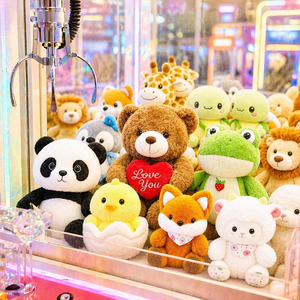
For high-end retail, corporate mascots, and collector plush, high-density Crystal Super-Soft Velboa (300+ GSM) or long-pile faux fur combined with 100% virgin 3D siliconized PP cotton offers optimal hand-feel, rich color depth, and superior softness. For arcade claw machine mix and promotional giveaways, medium-density boa plush (200–220 GSM) or tricot fabrics combined with standard recycled PP cotton fiber provide an economical cost structure while maintaining attractive visual appeal and structural integrity under compression.
Q6: How is vacuum compression packaging performed, and does it deform plush toys?
Vacuum compression packaging involves placing finished plush units into heavy-duty polybags and removing air via industrial vacuum sealing machinery, reducing overall volumetric cargo size by up to 60%. Because we utilize high-resiliency 3D/7D hollow siliconized PP cotton fill, the fibers retain structural memory. Upon unpacking and light manual fluffing or aeration, the plush toys regain their original shape and dimensional volume within 24 to 48 hours without permanent creasing or deformation.
Q7: Can you manufacture eco-friendly custom plush using 100% recycled materials?
Yes. We specialize in GRS-certified sustainable plush manufacturing. The outer plush shell can be woven entirely from recycled polyethylene terephthalate (rPET) yarn derived from post-consumer plastic bottles. The internal stuffing utilizes 100% GRS-certified recycled polyester fibers. Additionally, we provide FSC-certified paper hangtags, soy-ink printing, and oxo-biodegradable outer polybags to deliver a 100% eco-compliant product line for environmentally conscious brands.
Q8: What are your standard payment terms and Incoterms for B2B wholesale export orders?
Our standard payment terms for custom OEM production are a 30% deposit upon sample approval and contract signing, with the remaining 70% balance due upon completion of production and presentation of the Bill of Lading (B/L) copy or pre-shipment inspection pass report. We support all major Incoterms 2020 including FOB (Shanghai/Ningbo/Qingdao), CFR, CIF, EXW, and DDP (Delivered Duty Paid), handling all customs clearances and inland transportation directly to your distribution center.
Ready to Scale Your Custom Plush Production?
Consult directly with our senior plush engineering team. Get rapid technical feasibility assessments, complimentary 3D pattern reviews, and instant factory-direct B2B price quotes within 12 hours.
Get a Quote