



Executive Summary: The Evolution of Educational Toy Manufacturing
The global educational toy sector is undergoing a profound structural evolution. No longer limited to basic plastic blocks or elementary puzzles, contemporary early childhood development demands precision-engineered, multi-sensory, and technologically integrated learning tools. As a premier Educational Toys Manufacturer & Factory backed by over 18 years of specialized industry expertise, our organization serves as an essential strategic manufacturing partner for global importers, educational brands, wholesale distributors, and institutional buyers seeking market-differentiating product inventory.
Operating state-of-the-art production facilities headquartered in New Delhi with major manufacturing hubs in Tronica City, Ghaziabad, we integrate rigorous engineering workflows with developmental psychology principles. Modern educational tools must fulfill a dual imperative: captivating early learners through tactile, visual, and cognitive engagement while adhering strictly to international safety benchmarks such as EN71, ASTM F963, ISO 8124, and CE standards. This whitepaper offers procurement managers an authoritative breakdown of product categories, material safety innovations, market trajectory analyses, and B2B sourcing strategies.
Strategic Sourcing Insight: Demand for hybrid educational toys—combining screen-free physical tactile manipulation with digital feedback systems—has grown by 34% year-over-year. Global buyers prioritizing non-toxic materials and certified structural safety gain immediate competitive leverage in North American and European retail landscapes.
Detailed Product Category & Engineering Analysis
To navigate the expanding ecosystem of early learning tools, B2B buyers must evaluate products based on structural longevity, cognitive target age brackets, and safety certifications. Below is an engineering and pedagogical evaluation of our core recommended product lines:
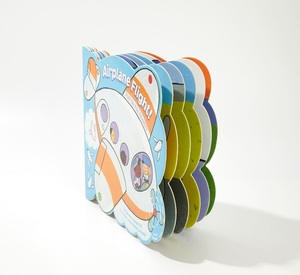
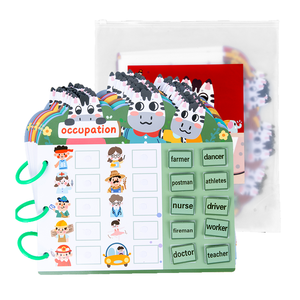
Montessori Quiet & Activity Books
Fabricated using non-toxic FSC-certified dense cardboard and heavy-duty felt. Designed to build fine motor skills, spatial reasoning, and self-directed sensory exploration in toddler demographics (Ages 1-4).
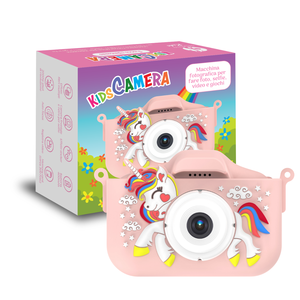
Kid-Safe Optics & Digital Cameras
Equipped with drop-resistant food-grade silicone armors, low-radiation 2.0" IPS anti-glare display panels, and intuitive dual-lens optics. Engineered for early photography, creativity, and hand-eye coordination.
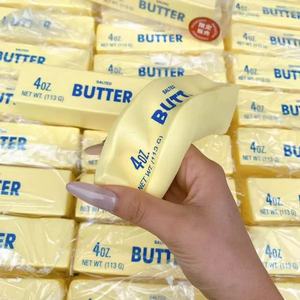
Slow-Rebound Sensory Fidgets
Utilizing high-density, ultra-soft polyurethane (PU) formulations. Free of volatile organic compounds (VOCs) and phthalates. Formulated specifically for anxiety regulation, focus enhancement, and tactile therapy.
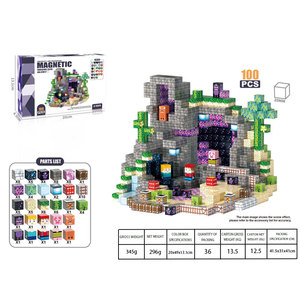
Magnetic STEM Building Systems
Features ultra-sonically welded ABS housing enclosing rare-earth Neodymium (NdFeB) permanent magnets. Eliminates detachment risks while supporting complex architectural and spatial 3D building tasks.
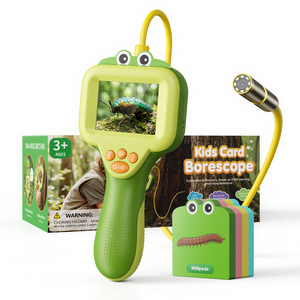
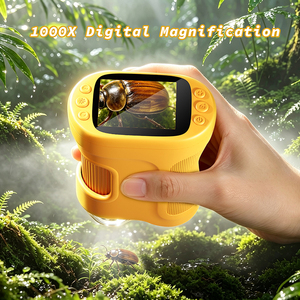
Digital Microscopy & Borescope Kits
Advanced STEM tools incorporating high-definition 2MP digital image sensors, adjustable LED arrays, and micro-probe cameras. Ideal for real-time biological observation in classrooms and field research.
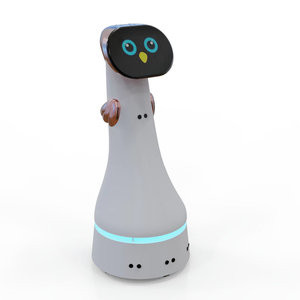
Interactive Educational Robotics
Smart interactive service and tutor robots tailored for preschools and primary schools. Built-in voice recognition, programmable logic steps, and social interaction algorithms to facilitate group learning.
Technical In-Depth Highlight: Scientific Discovery & Optical Instrumentation
A rapidly expanding high-margin segment in educational retail is early-stage scientific instrumentation. Our STEM Talking Kids Borescope Kit and USB Science Microscopes address the gap between toy-grade novelties and expensive laboratory equipment. By employing optical-grade acrylic lenses combined with 2MP digital sensors, these instruments allow young researchers to capture digital stills and video clips directly to local storage.
From a manufacturing standpoint, optical educational toys demand stringent tolerance engineering. Dust-free cleanroom assembly prevents lens contamination, while automated light-meter calibration ensures that LED illumination arrays remain below safe eye-exposure limits (EN 62471 photobiological safety standards). Procurement clients can customize firmware language settings, branding accents, and packaging configurations to target localized educational curricula.
Future Procurement Trends in Educational Toys (2025–2030)
As retail channels adapt to shifting consumer demographics and evolving institutional procurement budgets, staying ahead of manufacturing trends is crucial for enterprise profitability. Our market research division highlights four macro trends shaping the educational toy landscape over the next five years:
1. Screen-Safe Hybrid Learning Technologies
Parents and educators are increasingly actively seeking alternatives to smartphones and tablets. Products that offer digital functionality without open internet exposure—such as standalone digital cameras, localized voice-prompt borescopes, and offline Montessori audio storytellers—are experiencing explosive growth. Sourcing strategies must emphasize standalone device architecture with zero cloud-privacy vulnerability (COPPA compliant).
2. Neurodiverse & Inclusive Sensory Toy Design
Educational curricula worldwide are prioritizing sensory integration tools for neurodivergent learners, including children on the autism spectrum or with ADHD. Toys engineered with specific Shore hardness levels in soft PU elastomers, tactile wooden matching boards, and low-acoustic magnetic latches provide crucial sensory feedback without overwhelming users. Importers offering certified therapeutic-grade sensory items command superior retail price points.
3. Sustainable Material Sourcing & Zero-Plastics Directives
European Union directives and global environmental regulations are accelerating the phase-out of traditional non-recyclable petroleum plastics. Forward-thinking manufacturers are transitioning to bioplastics (PLA), FSC-certified beechwood, water-based non-toxic inks, and fully recycled cardboard packaging. OEM customization programs now standardly offer eco-friendly substrate substitution options.
4. Modular STEM to STEAM Curriculum Alignment
The transition from traditional STEM to STEAM (incorporating Art & Design) demands modular toy sets that encourage open-ended creativity alongside logical reasoning. Magnetic tile systems with customized aesthetic geometry, paintable wooden activity books, and customizable robotic housings reflect this operational shift.
Manufacturing Operations & Enterprise Competence
Partnering with an established manufacturer guarantees supply chain predictability, robust production capacity, and uncompromised compliance. With over 18 years of specialized manufacturing experience, our enterprise infrastructure includes:
- Scalable Production Capacity: Automated injection molding, precision CNC woodworking, ultrasonic welding, and automated surface-mount assembly lines capable of delivering high-volume seasonal procurement runs.
- End-to-End OEM/ODM Services: Comprehensive product development support—ranging from initial 3D rendering and rapid prototyping to custom mold development, PCB layout engineering, and retail packaging artwork creation.
- Rigorous Quality Control Framework: Every production batch undergoes a 5-stage quality audit: Raw Material Spectrometry Testing, In-Line Assembly Inspection, Drop & Tensile Stress Testing, Electronic Component Calibration, and Final AQL 2.5 Sampling.
- Global Regulatory Knowledge: Active compliance assistance ensuring all exported inventory arrives with complete documentation for customs clearance, including CE mark, UKCA, ASTM F963, EN71 Parts 1-3, Phthalate tests, and RoHS verification.
Global Sourcing & Procurement Optimization Guide
For international buyers, negotiating toy manufacturing contracts requires balancing Minimum Order Quantities (MOQs), tooling costs, and lead times. To optimize your sourcing efficiency, consider the following structural guidelines:
1. Prototype & Tooling Verification: Always request functional pre-production prototypes before committing to mass mold fabrication. Our rapid prototyping division utilizes high-resolution SLA 3D printing to provide sample units within 5 to 7 business days, verifying ergonomic handling and structural integrity prior to steel mold investment.
2. Seasonal Procurement Lead Times: For Q4 holiday sales peaks, institutional and retail procurement should ideally be locked in by early Q2. Custom OEM production cycles typically require 30 to 45 days, with maritime freight buffer windows accounting for an additional 20 to 35 days depending on destination ports in North America or Europe.
3. Private Labeling & Brand Customization: Capitalize on our flexible private labeling services. Custom silkscreen printing, laser engraving on wooden components, customized color matching (Pantone matching system), and bespoke multi-lingual instruction manuals enable brand equity building without exorbitant upfront R&D costs.